
Persistent Construction Case Study
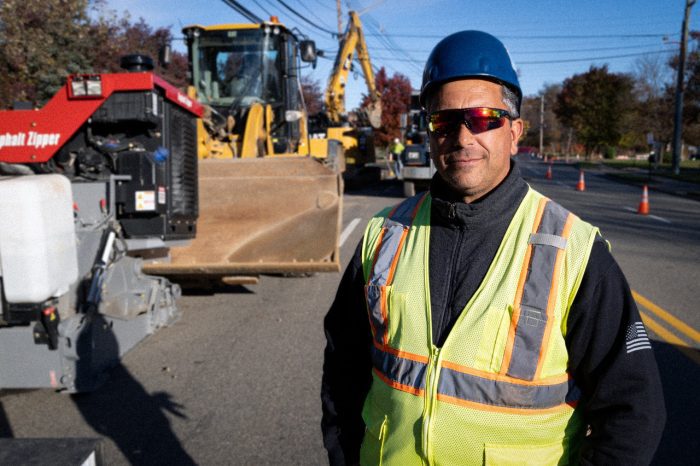
Faster trenching shifts workflow on 5,000-foot utility project
Most utility trenching jobs still start the same way: saw cut, chunk asphalt, load it, haul it away, then finally start digging. It’s slow, it’s noisy, and it burns hours before real progress even begins.
That’s the old way. This project didn’t follow it.
Frank Pellicano, a project manager with 18 years at Persistent Construction, ran a 5,000-foot sanitary force main from Route 10 to Ridgedale Avenue—and flipped the script using an asphalt grinder instead of saw cutting.
No staging. No waiting. No gap between steps.
They brought in an asphalt grinding machine and started cutting trench and installing pipe almost at the same time. In one stretch, the crew ground out 200–220 feet of trench in about 20 minutes. By the time the asphalt grinder finished a section, the pipe crew was already dropping in behind it.
That’s not incremental improvement. That’s a different workflow.
“It used to be saw cut and remove asphalt ahead of time,” Pellicano said. “Now we’re grinding and installing right behind it.”
The impact showed up immediately. Instead of burning half the day on prep, the crew stayed in motion. Utility trenching turned into a continuous operation—cut, dig, install, move. No stop-and-go.
Then there’s the material problem—usually a headache. Saw cutting creates chunks. Chunks have to be separated, loaded, hauled, dealt with. It adds time and labor nobody wants to track.
The asphalt grinding machine eliminated that issue. It pulverized the asphalt into fine material that blended with the native soil. No sorting. No extra handling. Just move it and keep going.
Conditions weren’t easy either. Asphalt thickness hit up to 10 inches on Route 10 and around 8 inches on Ridgedale. The asphalt grinder didn’t care. It kept a consistent cut rate across both.
Wear held up too. The crew pushed nearly 900 feet at full depth before touching the cutter teeth—and even then, they only swapped a few.
But the biggest shift wasn’t speed or wear. It was buy-in from the crew.
These are guys used to saws, jackhammers, and long prep cycles. They switched to the asphalt grinder and didn’t look back. Less manual effort. Faster progress. More production in the same day.
They had a choice—and they chose grinding.
That’s the real takeaway.
Switching from saw cutting to an asphalt grinding machine doesn’t just make utility trenching faster. It changes how the entire job flows. It compresses timelines, cuts handling, and keeps crews productive instead of waiting.
If you’re still saw cutting on utility trenching jobs, you’re not just losing time—you’re breaking your workflow before the job even starts.