
Asphalt Grinding vs. Saw Cutting: What Utility Contractors Should Know
Underground utility contractors fight a constant battle against utility trenching delays. Coordinating between different teams, trenching utilities through paved surfaces, and the cost of asphalt restoration are challenging to say the least. Many contractors still rely on saw cutting asphalt, while an increasing number are turning to asphalt grinding instead. A deep dive comparison into both is a useful way to determine when each is the most beneficial.
Why Does This Comparison Matter on Utility Jobs?
Any contractor will tell you about the pressure of staying on schedule and managing multiple crews. Asphalt cutting is just the first step, but it can become a bottleneck on a utility trenching project. The method utility contractors use for asphalt removal on the job site affects all facets of a utility project.
On the other hand, saw cutting still makes sense when tight tolerances matter. A saw might be the right choice for projects that require perfectly straight, square edges. Sawcutting is also a good alternative for areas where grinding equipment can’t reach.
What is Saw-Cutting?
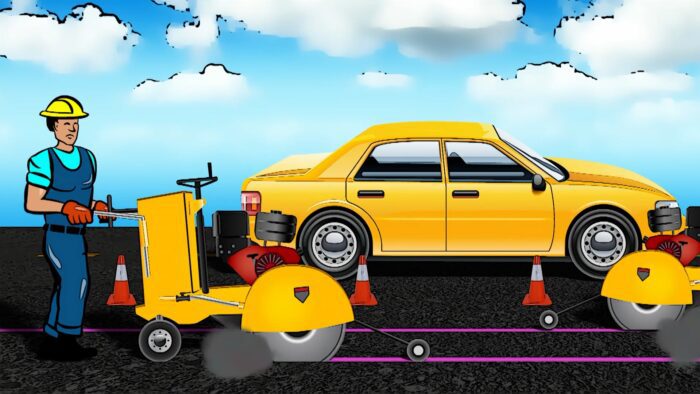
Saw cutting is a pavement removal method. It uses a concrete saw with a diamond blade to cut straight, vertical edges in asphalt or concrete. The result is a clean, precise edge.
A backhoe breaks the asphalt into chunks and loads it on a truck. The truck hauls the asphalt chunks to a certified disposal location. Saw cutting is a multi-step, multi-equipment process that can add cost and hours to a utility project.
What is an Asphalt Grinding Machine?
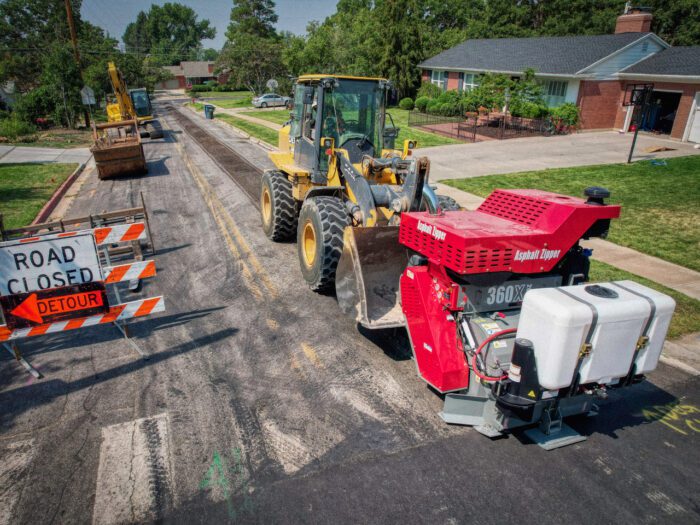
An asphalt grinding machine uses a rotating drum with cutting bits to pulverize the asphalt into 1-inch minus material. Also called an asphalt milling machine, this equipment has the ability to mill up to the full depth of the asphalt. Larger asphalt milling machines and asphalt grinders are self propelled and require special transportation to the job site. This can cause additional delays and scheduling issues.
Fortunately, asphalt grinding attachments for backhoes and loaders provide a viable alternative to large milling machines. A work truck can quickly pull these attachments to the jobsite. They mount to the bucket of a loader or backhoe in minutes and have the power of much larger machines. They also feature hydraulic depth control and have a wide range of cutting depths from a few inches deep to 12 inches.
Asphalt grinding attachments feature higher horsepower and production than a skid steer cold planer. At the same time, they are much more mobile and less expensive than a larger asphalt milling machine. These features make them a practical substitute for larger cold milling machines, skid steer milling attachments, and saw cutting.
Mobilization and Crew Control
Saw cutting often slows projects down before work even starts. It usually requires a separate saw crew or subcontractor. Job site progress depends on each team completing tasks on time. When the saw cutting crew runs late, contractors lose control over the job schedule.
The benefits of asphalt milling include keeping the work in house. Crews can mobilize quickly, start work immediately, and handle pavement removal themselves.
Using the recycled asphalt as trench back fill greatly reduces or eliminates loading and hauling. Contractors avoid delays tied to subcontractors and keep the entire operation in-house. Grinding consistently reduces downtime and cost effectively keeps projects on track.
Cost Differences
Crews can save an average of $1,000 for every 100 feet of utility trench when they use asphalt grinding instead of saw cutting. An asphalt grinding attachment has a milling depth of up to 12 inches in a single pass. A pavement surface removal project that would take 8+ hours of saw cutting, chunking, loading, and hauling takes 30 minutes with asphalt milling.
Trench Quality and Restoration Outcomes
Saw cut trench edges have a smooth surface that makes it difficult for the new asphalt to bond with the existing pavement. As traffic drives over the new asphalt, it becomes more susceptible to sinking under pressure. Asphalt grinding creates an interlocking edge with the existing pavement. The new asphalt bonds better with it, leading to a more permanent pavement repair with less trench failure.
Traffic Control
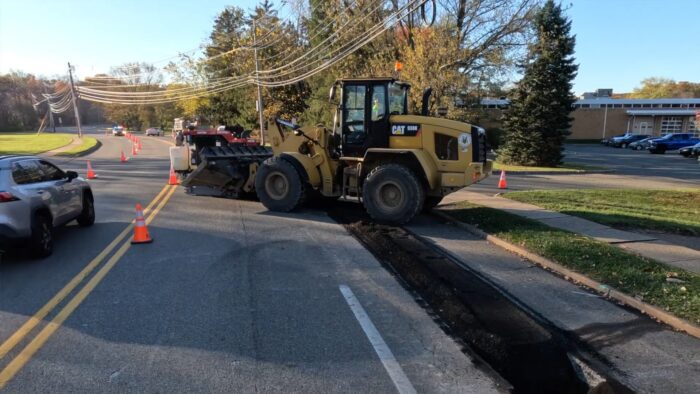
Saw cutting involves more traffic control than asphalt grinding. Because it takes more time, a portion of the road needs to stay closed for longer. In addition to this, because the asphalt is completely removed, cars cannot drive over a saw cut surface.
Asphalt grinding, on the other hand, is a much less complicated process with less down time and lane closures. The asphalt millings stay in the trench, and cars can drive over the millings to access businesses and residences.
In addition to this, by bringing asphalt grinding in house, utility contractors can open only the trench they need. This means lane closures only on the section of road they are working on, saving miles of traffic disruption.
Conclusion
Saw cutting still works when projects demand tight tolerances or perfectly straight edges. For most utility trenching though, it adds time, coordination issues, and unnecessary disruption.
Asphalt grinding gives contractors more control over scheduling, reduces traffic impacts, and improves trench restoration quality. It also significantly lowers project cost and completion time. By keeping pavement removal in-house and reusing milled material, grinding helps utility crews move faster and avoid delays.
Google Takeaways
- Asphalt grinding machine vs. saw cutting for utility trenching
- Asphalt grinding reduces delays and traffic disruption
- Utility contractors use asphalt grinding to keep work in-house
- Asphalt grinding improves trench restoration and pavement life
- Saw cutting still fits jobs requiring precise, straight edges