
Executive Summary
Contractors use asphalt milling attachments for skid steers on a number of different projects. For parking lots, skid steer mill heads are particularly useful for edge work, pothole repair, and small asphalt patches.
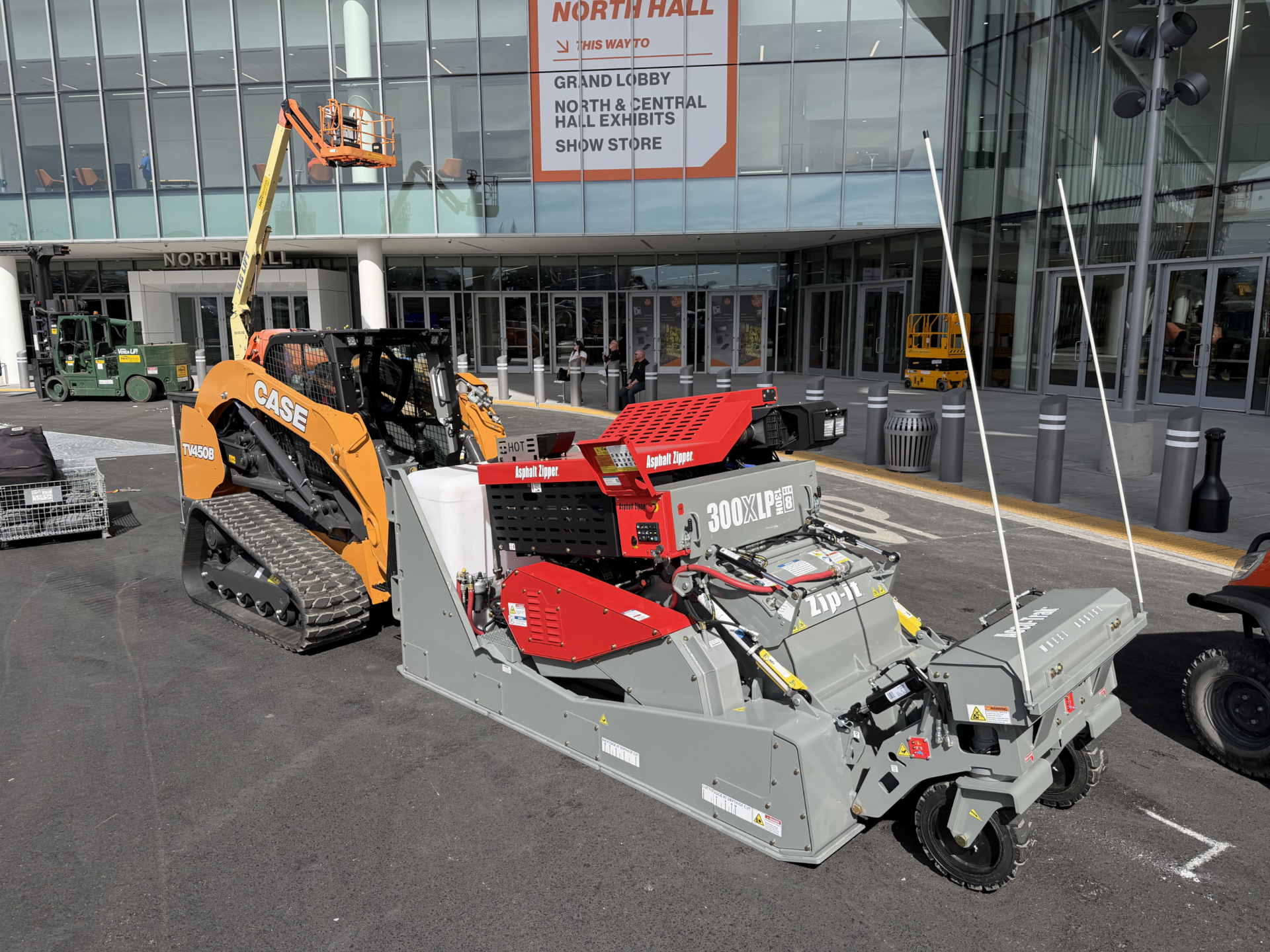
Unfortunately, skid steer planers typically rely on their host vehicle’s hydraulics. This limited hydraulic capacity means shallow, top layer cutting depths, slow production speed, and even stalling and overheating.
A relatively new product provides a good alternative to skid steer mill heads. Attachments with dedicated engines can now connect to compact track loaders (track skid steers). They offer a smaller footprint ideal for tight corners and edges while also providing significantly greater power and production necessary for full parking lot repairs.
Understanding Hydraulic Flow vs. Asphalt Grinding Power
Skid steers power attachments using their hydraulic systems. Gallons per minute (GPM) measures how much hydraulic fluid the skid steer pumps per minute. This determines cutter head rotation speed.
PSI (pounds per square inch) measures the hydraulic system pressure, which creates available torque or cutting force. The higher the torque, the more power the attachment has. Large attachments need hydraulic fluid flow at a higher pressure.
Host vehicle hydraulic systems work well with buckets and brooms. Skid steer asphalt grinder attachments require high flow rates at high pressure. Deeper milling depth or longer cuts can tax the equipment. This can cause the equipment to bog down or the skid steer to overheat.
The Real World Impact on Parking Lot Repairs
Contractors might opt to use hydraulically-powered asphalt grinders for skid steers on parking lot pavement milling jobs. Part of the appeal is their compact size and ability to maneuver in tight areas. A large self-contained asphalt milling machine could be too large for the job or too expensive to transport.
However, because of their limited power, asphalt grinder attachments for skid steers can bog down in deeper asphalt. Pushing the equipment to its max on the job site can also overheat the hydraulic fluid. This in turn can trigger auto shut downs and host vehicle pump/seal damage.
Bypassing Hydraulic Bottlenecks with Dedicated Engine Power
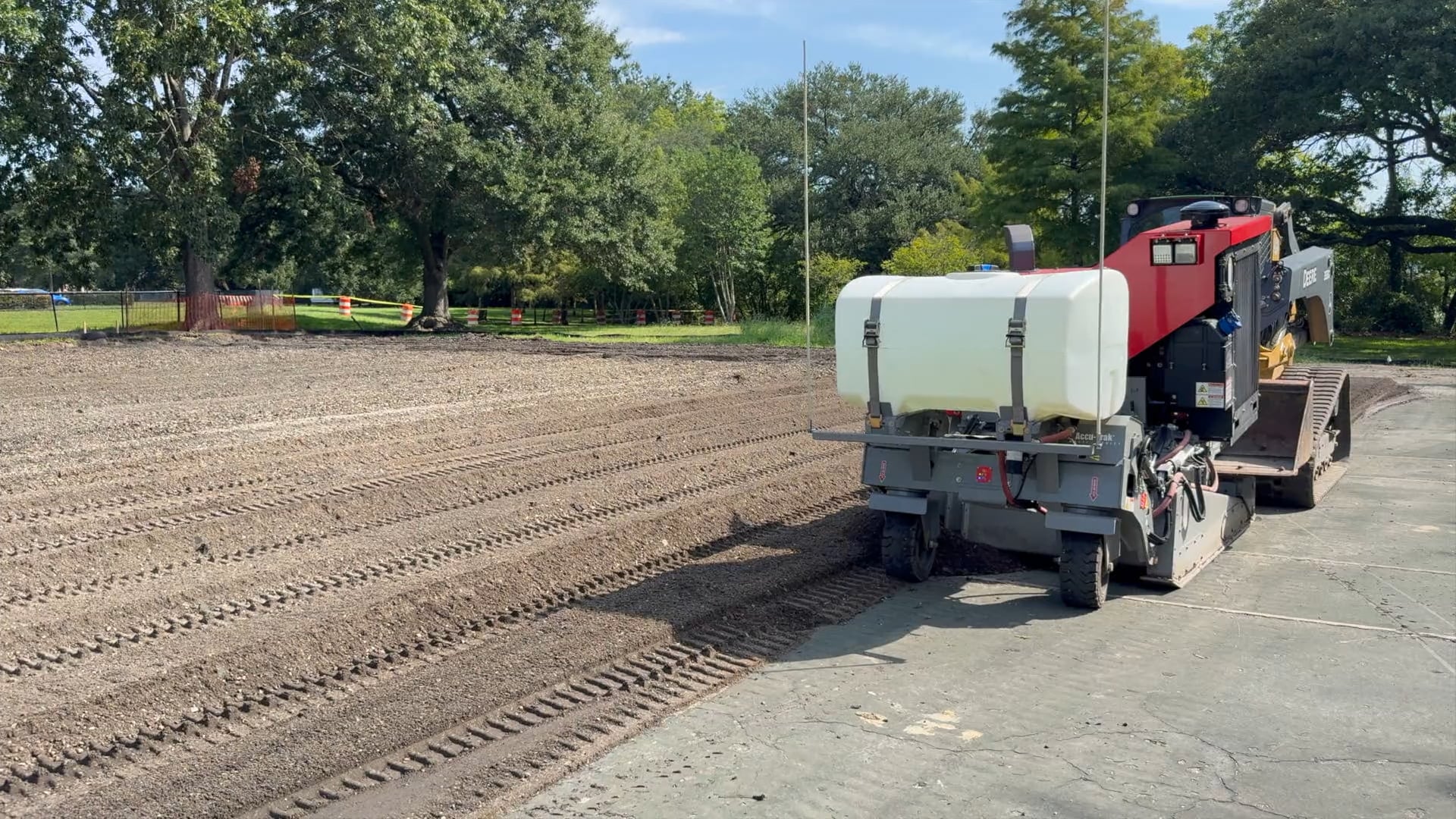
New asphalt milling attachments for skid steers achieve significantly higher speed and production with dedicated diesel engines. Their unique lower profile allows them to connect to track skid steers (compact track loaders). This opens robust asphalt milling and full-depth reclamation attachments to a whole new family of host vehicles.
With 10-inch grinding depths and 130 hp engines, these skid steer milling attachments have the capability to mill full parking lots. Even better, you can use full depth reclamation to pulverize the asphalt and mix it with the base layer for long term repairs. This form of asphalt recycling eliminates the need to haul out recycled asphalt product (rap) or asphalt surface chunks.
A: Yes, Asphalt milling machines with dedicated engines can attach to compact track loaders. These machines have high production rates and deeper cutting depths, ideal for full parking lot repairs. Crews can use skid steer mill heads powered by hydraulics for small patch jobs, pothole repairs, or limited surface milling.
A: Many skid steer planer attachments rely entirely on the host vehicle’s auxiliary hydraulic system for power. Continuous asphalt grinding, especially in deeper asphalt, strains the cold planer skid steer attachments’ flow (GPM) and pressure (PSI). This can cause the equipment to bog down, trigger automatic safety shutdowns, or damage hydraulic pumps and seals on the host skid steer.
A: Two main measurements determine hydraulic performance :
Gallons Per Minute (GPM): Measures how much fluid flows through the host vehicle’s hydraulic system. The higher the GPM, the faster the drum rotation on the skid steer cold planer.
Pounds Per Square Inch (PSI): Measures hydraulic system pressure in the host skid steer. While GPM measures how fast the grinding drum rotates, PSI dictates the cutting torque and depth capacity. This means the force the machine can use to grind through the existing asphalt without stalling.
A: Asphalt grinding attachments for compact track loaders with dedicated engines offer several key advantages:
Increased Power: Engine outputs up to 130 hp with 10-inch grinding depths.
Full-Depth Reclamation: Attachments with dedicated engines pulverize full parking lots and recycle existing pavement in place. This eliminates the cost of hauling away chunked or milled material.
Compact Mobility: Asphalt grinders for skid steers with dedicated engines can maneuver in tight areas. They also provide grinding and reclamation capacity equal to larger equipment.
Conclusion and Takeaway
Matching your equipment to your job scale is an important part of planning a parking lot job. A hydraulic-powered skid steer cold planer lacks the production speed, grinding depth, and power for all but the smallest projects.
Asphalt grinding attachments with dedicated engines provide easy mobility in parking lots. They also provide much higher production rates and cutting depths. This combination makes them ideal equipment for everything from small patch jobs to full parking lots.