
Executive Summary
Choosing between a road reclaimer attachment and a self-propelled machine comes down to project size and future project needs. Today’s attachments are no longer just for patch work and utility trenching. They are also routinely deployed for large-scale, full-depth road rehabilitation projects. In this guide, we break down capital investment, mobilization overhead, and setup time for both self-propelled machines and road reclaimer attachments. This information helps contractors and municipalities find the most cost-effective equipment for full depth reclamation projects.
Which Road Reclaimer Do You Need? Compact Attachments vs. Self-Propelled
Larger, self-propelled road reclaimers and asphalt milling machines may not always be the best choice for your paving projects. While ‘big iron’ dominates massive highway work, compact reclaimer attachments often yield more project versatility for utility trenches, parking lots, patch jobs, and even full city blocks. They can also drastically reduce mobilization, permitting, and transportation overhead.
Are Self-Propelled Road Reclaimers Cost-Effective? Understanding Operational Costs
While powerful, a self-propelled asphalt reclaimer has a high total cost of ownership, driven by specialized transport, maintenance, and lengthy setup times. This often makes it inefficient for mid-sized projects like city blocks, parking lots, utility trenches, and asphalt patches.
The following table compares key performance metrics and logistical requirements for compact reclaimer attachments versus large, self-propelled reclaimers.
Comparison Table: Self-Contained Road Reclaimers vs. Attachments
| Feature | Compact Road Reclaimer Attachment | Self-Propelled Road Reclaimer |
| Capital Investment | Lower (removable attachment for existing equipment) | High (dedicated asset) |
| Transportation | Standard work truck (generally) | Heavy-duty low-boy/permits |
| Setup Time | Minutes | Hours/Days |
| Speed/Production | Up to 1-2 miles of full-width road / day | High volume/fastest for large projects |
| Ideal Project | Full Roads, Asphalt Patches, Utility Trenches, Parking Lots, Paths and Trails | Heavy Traffic Highway Full Roads |
| Material Reuse Potential | High (on a variety of projects) | High (with some logistical hurdles) |
| Cutting/Asphalt Grinding Depth | Up to 12 inches | Up to 22 inches |
| Cutting Width | Typically 24-72 inches | Typically 48-120+ inches |
When Should I Use a Compact Asphalt Recycling Attachment?
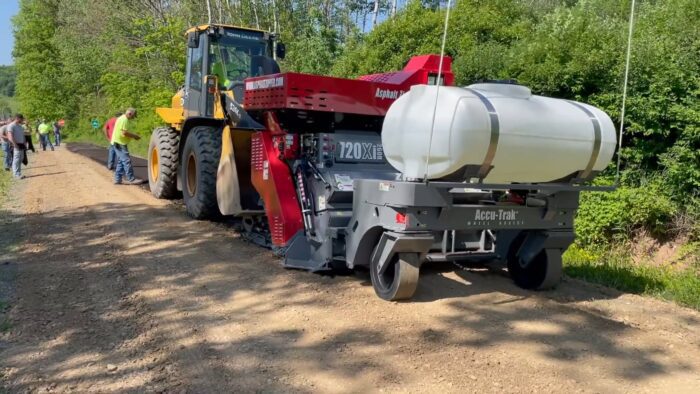
High-powered asphalt recycling and milling attachments can perform up to two miles of full-depth reclamation per day for large county, municipal, and residential road projects. These same machines are also easy to transport and maneuver on the job site. This makes them an ideal option for parking lot repairs, shoulder repairs, or asphalt patching jobs.
While multi-lane interstate or massive highway projects often demand the sheer size of a self-contained reclaimer, compact attachments are often the preferred choice for county or residential road rehabilitations, where maneuverability and rapid deployment are just as critical as raw power and production.
What is the difference between a skid steer cold planer and a road reclaimer attachment?
It’s important to avoid confusing asphalt reclaimer attachments with skid steer attachments like skid steer cold planers. Skid steer mill heads are hydraulic-auxiliary driven, meaning they derive their power from the hydraulic system of their host skid steer. This significantly slows production speed and limits asphalt milling depth.
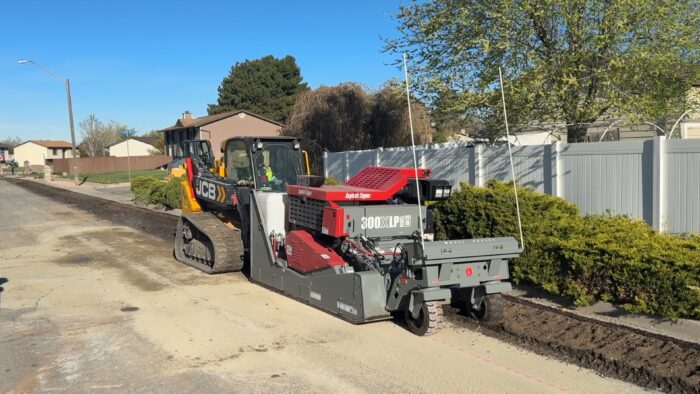
Larger road reclaimer attachments combine ease of transport and mobilization on the job site with dedicated engines of up to 260 hp. They attach to a loader and can reclaim up to 2 miles of full-width road per day.
A third option is a self-powered road reclaimer machine / asphalt grinder for compact track loaders, a.k.a. track skid steers. This is not your typical skid steer milling attachment. This powerhouse has dedicated 130 and 170 hp engine options that grind up 10-inches deep.These also tow to the job site behind a standard work truck and only take minutes to unload, attach to your CTL, and start grinding.
So what can road reclaimer attachments mean for your production and projects?
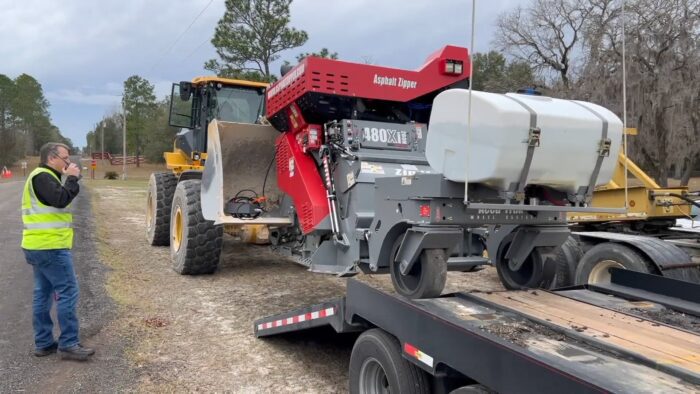
- Multiple patch jobs a day
- Full city blocks and full road projects
- Multiple pothole repairs per day
- Small equipment footprint for paths and trails
- Versatility to mill around parking lot landscape islands and light poles
- Utility trenching asphalt grinding
Frequently Asked Questions
Q: When should I choose a compact road reclaimer attachment over a large self-propelled reclaimer?
A: Use a compact attachment for utility trenches, parking lots, smaller patch jobs, and full width roads where maneuverability and lower mobilization costs are key. Large self-propelled reclaimers are better suited for high-volume highway projects.
Q: Can compact reclaimer attachments handle the same depth as larger machines?
A: While self-propelled machines often reach greater depths (up to 22 inches), high-powered reclamation attachments can grind up to 10-12 inches deep, which is sufficient for most municipal road repairs and base stabilization.
Q: Is there a significant difference in transportation and setup between these two equipment types?
A: Yes. Large reclaimers require heavy-duty low-boy trailers and special permits, often taking hours or days to deploy. Compact attachments can be towed by a standard work truck and are ready to grind in minutes, drastically reducing mobilization time and expense.
Q: How does using a compact asphalt grinding machine attachment affect my project profitability?
By reducing overhead costs like transportation, permits, and setup time, compact attachments allow contractors to profitably tackle smaller, high-frequency jobs that aren’t economically viable for large, self-propelled equipment. They also allow communities to perform their own road work along with equipment they already own.
How to Optimize your Fleet for your Projects
Find the best, most versatile equipment for your paving projects. It’s critical to match the machine to the job. While self-propelled reclaimers are ideal for asphalt repair on massive highways, they drain margins on smaller projects through high mobilization costs. Utilize high-powered compact attachments to tackle full-width roads, patches, lots, and trenches for long-term profitability. Efficiency is your competitive edge—choose tools that maximize every dollar.