
Utility contractors don’t just lose time in the trench—they lose it before the first bucket hits the ground. Slow asphalt cutting, inefficient asphalt removal, and stop-and-start workflows drag production down.
Here’s the good news: you can optimize your utility trench jobs without adding extra manpower. The secret lies in improved asphalt removal processes. Here’s where to focus.
1. Stop Treating Asphalt as a Separate Phase
Most crews still treat cutting asphalt as a multi-step process. First, they saw cut the asphalt, chunk it and load it on trucks.
Then there’s the asphalt disposal. You need to haul it (hopefully not too far) to a C&D Landfill that accepts asphalt. This multi-step process takes time, money, and crew.
Using an asphalt grinder instead for trenching utilities streamlines asphalt removal by virtually eliminating these steps. This means less waiting for cutting, loading, hauling and disposal. It also means that you can start laying your pipe trench much more quickly.
2. Switch from Saw Cutting to Asphalt Grinding When It Makes Sense
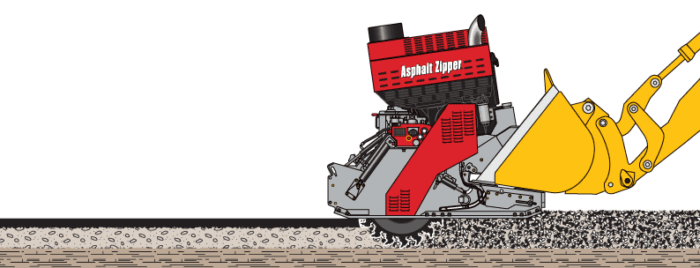
Grinding asphalt with a pavement grinder opens the trench faster. It also leaves recycled asphalt which often works well for trench backfill. A key part of this equation a portable asphalt grinding attachment.
Crews can pull these high-powered machines behind a standard work truck. They are easy to unload and connect to a track skid steer (compact track loader), backhoe, or loader in minutes. Their smaller size and higher production (they cut up to 12 inches deep) make them ideal for tight urban areas.
Possibly best of all, you can operate an asphalt grinding machine with as little as a two- person crew. For utility trench work, asphalt grinding wins on production and flexibility.
3. Eliminate Double Handling of Material
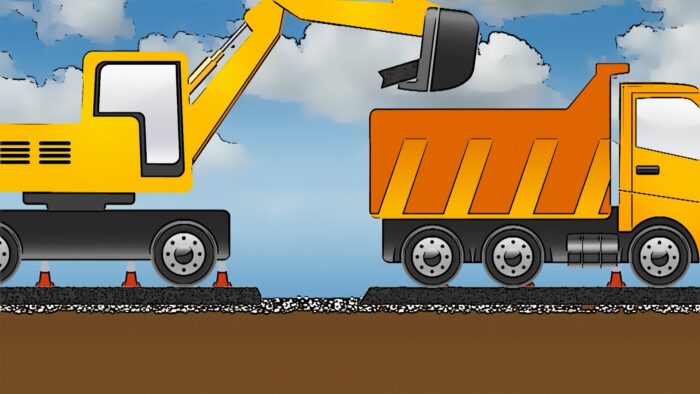
Chunking and loading means you need to haul out the old asphalt and bring in new aggregate material for trench backfill.
Grinding changes that.
With asphalt grinding, material stays on-site as reusable recycled asphalt millings for trench backfill. If your project specs don’t allow this, you can easily scoop it up as you excavate your trench. This cuts hauling time, truck coordination, and job site congestion.
Less handling = faster trenching.
4. Keep Your Pipeline Trencher Moving
Your pipeline trencher or utility trencher only makes money when it’s working—not when it’s waiting on asphalt prep. If your trencher is sitting idle while crews finish asphalt cutting, your process is backwards.
Having a portable asphalt grinder on site allows you to open only the trench you need, when you need it. Because vehicles can drive over the asphalt millings, this also means less traffic control needs on the construction site.
Dial in your asphalt removal method so the trench is ready just ahead of the trencher, not days before.
5. Build a Continuous Workflow (Grind → Trench → Backfill)
Fast crews don’t batch work. They flow. Here’s an example construction project:
- Asphalt grinding machine pulverizes the asphalt surface into 1-inch minus material.
- Utility trencher or backhoe excavates the pipe trench.
- Crew follows with install and backfill, often using reclaimed asphalt pavement (rap) for backfill.
There is no waiting on subcontractors and no idle equipment or crews. Using recycled material for backfill is more environmentally friendly, and it saves time and money. In addition, if you use 179 of the tax code, your asphalt grinder could be completely tax deductible, another huge cost savings.
This is where smaller crews outperform bigger ones.
6. Reduce Setup and Mobilization Time
Every time you bring in separate crews or machines for asphalt cutting, you add:
Transport time
Setup time
Coordination delays
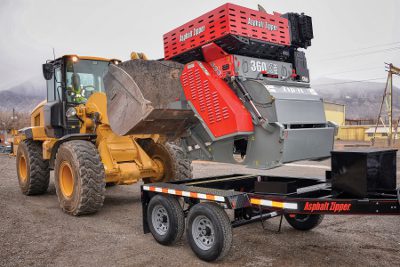
Using a single high-powered asphalt grinder attachment cuts that overhead. An asphalt grinding machine attachment quickly connects to a loader, backhoe, or compact track loader (track skid steer).
A heavy-duty asphalt grinding attachment is also as easy to transport as a skid steer milling attachment. It also offers more speed and power on the jobsite.
Less mobilization = more trench per day = more cost savings.
The Bottom Line
Utility trenching speed isn’t about adding people—it’s about streamlining the process.
When you rethink asphalt removal, switch to efficient asphalt grinding, and keep your pipeline trencher in motion, production increases without increasing crew size.
Most delays happen above the trench. Fix that, and everything below it moves faster.
Google Takeaways
- Utility trenching speed is lost during asphalt removal—not excavation. Fix the process above the trench to improve total jobsite production.
- Asphalt grinding outperforms saw cutting. It reduces labor, eliminates multiple steps, and accelerates trench prep.
- Eliminating asphalt hauling and disposal cuts major delays. Reusing recycled asphalt millings for trench backfill keeps crews moving and lowers costs.
- Continuous workflow (grind → trench → backfill) increases efficiency. Avoid batching tasks and keep crews and equipment working in sequence.
- Portable asphalt grinding machines enable smaller crews to do more work. Two-person crews can handle trench prep with the right attachment.
- Reducing material handling speeds up utility trenching. Less loading, hauling, and importing aggregate means fewer bottlenecks.
- Keeping the pipeline trencher moving is critical to profitability. Idle trenchers signal inefficiencies in asphalt prep.
- Minimizing mobilization and setup time increases daily production. One machine replacing multiple steps reduces downtime and coordination delays.
- Recycled asphalt millings improve jobsite efficiency and sustainability. On-site reuse supports faster trench backfill and lowers material costs.
- The fastest utility trenching crews optimize process—not headcount. Smarter asphalt removal methods outperform adding labor.