
Quick Summary
- Many municipalities already own most road repair equipment but still outsource asphalt grinding and road reclamation.
- Surface patching alone does not fix weak or failed road base conditions.
- Asphalt reclamation stabilizes the base layer and creates longer-lasting repairs.
- A road reclaimer attachment helps crews complete full-depth reclamation in-house using existing equipment and staff.
Intro
Many road crews already own the trucks, rollers, and paving equipment needed for in-house repairs. What they often lack is the ability to repair the failed road base beneath the asphalt. Without asphalt grinding, milling, or reclamation capability, pothole repairs become a costly cycle of patching the same roads over and over. Adding a road reclaimer attachment allows crews to stabilize the base, complete deeper repairs in-house, reduce outsourcing costs, and extend pavement life using the equipment and staff they already have.
Many communities have an (almost) full fleet of road maintenance equipment. Often though, they still opt to outsource asphalt grinding, asphalt milling, and road reclamation to contractors.
Unfortunately, asphalt grinding and road reclamation also determine whether asphalt repairs last long term. In addition, it can be expensive and time-consuming to outsource this portion of the project.
Let’s take a practical look at what road repair equipment “the crew that has everything” needs. The right equipment allows crews to move from short-term fixes to longer-lasting and cost-effective in-house road repairs.
What road repair equipment does a well-equipped crew still need?
Most mid-sized cities own a dump truck, a backhoe or mini-excavator, a roller, and even a small paver. This fleet allows them to handle small to mid-sized repairs in house… or almost.
The missing piece is often below the surface.
Sometimes cities consider asphalt milling machines, cold planers, and road reclaimers specialized and expensive equipment. Traditionally, they have required a dedicated crew, special transportation, and a healthy budget to own and operate. That’s why many crews outsource this step of the project to contractors.
Asphalt removal is often the most critical aspect of lasting repairs. It can also be quite expensive. But what if there are other ways to handle this part of the job in-house? And what if you could do it without spending a fortune on extra equipment?
Why do in-house road repairs matter more than another patching tool?
Many well-equipped road repair crews still need equipment that stabilizes failed road base, not just the surface layers. That means adding asphalt reclamation capability.
Crews need equipment that removes the road surface but also has additional capabilities. This includes asphalt milling and asphalt grinding machines as well as road reclaimers for full-depth reclamation projects.
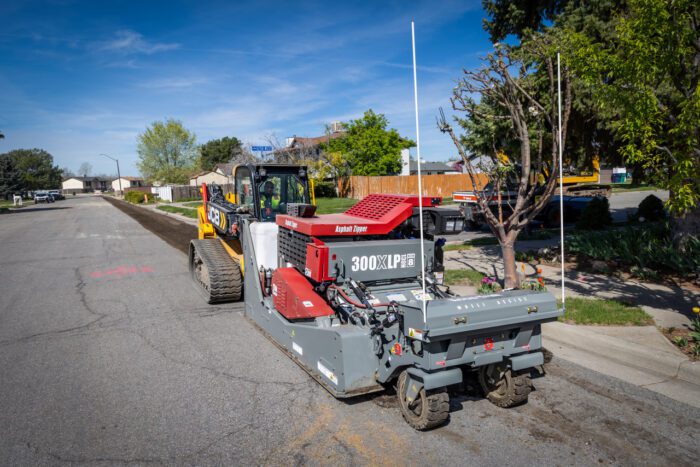
They can get all these applications from one attachment. It connects to a backhoe, track skid steer, or loader they already own. Instead of a milling head for a skid steer, many communities opt for a road reclaimer attachment.
These are not like your average skid steer milling heads. Robust attachments include hydraulic depth controls and mill from a couple of inches to a foot deep in one pass. They also have dedicated engines and attach to track skid steers, backhoes, and loaders in minutes.
These high-powered pieces of equipment tow behind a work truck. They require only a two – three person crew to operate, the same crew that operates the rest of the road repair equipment.
Why do pothole repairs fail?
Pothole repairs fail when the road base underneath remains weak or unstable. Even a good surface patch will break down faster if water, traffic, and poor base conditions are still in place.
Asphalt patching is only as good as the road base below it. Surface patching doesn’t solve the underlying road base failure.
Over time, cracks form in asphalt. Water then seeps in and weakens the pavement layers and base below the surface. In cold climates, this water freezes and thaws, causing even more road base damage.
Crews can patch and repatch the same section of road, but if they don’t address the road base, potholes will keep magically appearing. This turns pothole repair into a short-term repair cycle.
What is asphalt reclamation, and how does it improve road repair?
Asphalt reclamation is the process of pulverizing and mixing pavement and road base into reusable material for repairs. It helps crews extend the life of the pavement, stabilize the road base, reduce waste, and create more durable repairs than surface patching alone.
This new reclaimed asphalt pavement rap becomes a stabilized road base made of recycled materials. Crews can then grade, add water, roll, and repave with the equipment they already own.
Why does road reclamation support long-term road repairs?
Pavement reclamation creates a new, stabilized base layer using the recycled asphalt and existing materials from the road base. This repair method addresses the root problem of potholes and alligator cracks. Repairing and stabilizing the road base allows it to support new pavement. This greatly reduces or eliminates those pesky potholes in the process.
How does a road reclaimer helps crews do more work in-house?
A road reclaimer gives crews the ability to repair pavement failure without waiting on outsourced grinding or reclamation services. That means faster response times, more schedule control, and better use of existing staff and equipment. Cities gain more control without depending as heavily on subcontractors. This leads to cost savings on maintenance and repairs.
An asphalt reclaimer gives communities more control over timing, scheduling, and repair priorities.
Why Road Base Repairs Matter for Long-Lasting In-House Repairs
Communities that already own most of the road repair equipment they need should not have to rely on outside contractors for the most important part of the repair. Surface patching alone will not stop pavement failure. Long-lasting repairs require crews to stabilize and rebuild the road base beneath the asphalt. By adding asphalt reclamation capability, municipalities gain more control over schedules, reduce outsourcing costs, and complete stronger repairs with the crews and equipment they already have. The result is fewer repeat repairs, longer pavement life, and a more efficient road maintenance program built for long-term performance.
Frequently Asked Questions
What road repair equipment do many well-equipped crews still need?
Many crews already have trucks, excavators, rollers, and pavers. What they often lack is a road reclaimer that can reclaim the road base, not just patch the surface.
Why do pothole repairs keep failing?
Pothole repairs often fail because the road base underneath remains weak or unstable. If the base is not repaired, water, traffic, and freeze-thaw cycles will continue to break down the surface.
What is asphalt reclamation?
Asphalt reclamation is the process of pulverizing damaged pavement and blending it with the base into reusable material for road repair. It helps rebuild and stabilize the road base for more durable results.
How does full-depth reclamation with help in-house road repairs?
Full-depth reclamation allows crews to repair both the asphalt surface and the underlying road base in one process. A road reclaimer helps municipalities take on deeper repairs in-house with better schedule control and less reliance on outside contractors.